← Article suivant
← Next post


The new year begins with the Helens series.
L’année débute avec la série Helens.

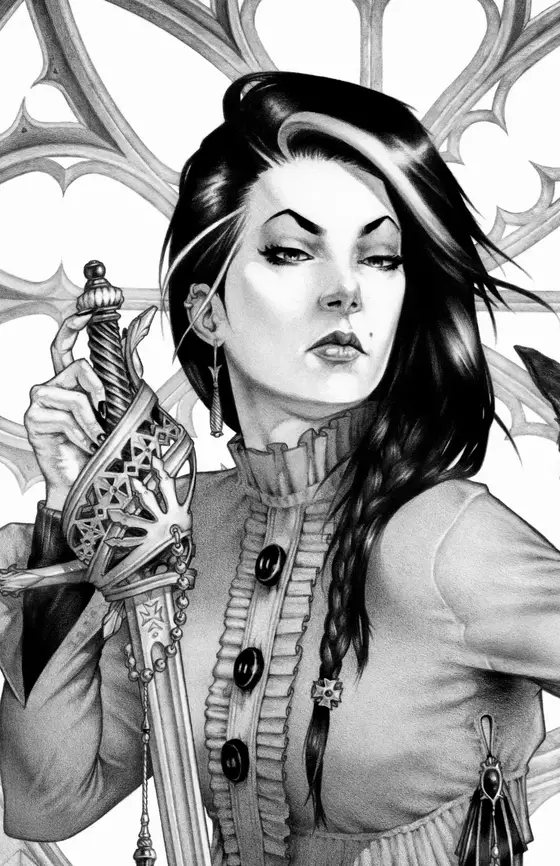
Regarding the composition, I chose sobriety. A background that was too complex would have weakened the impact of the drapery.
I eventually opted for an ancient portal, styled like an abandoned temple, to allow the dialogue between the fabric and its 'prey' to take center stage.
I rendered the anatomy in a 'full vertical' way, especially neck and torso, to set a continuity of shape and rhythm with the drapery.
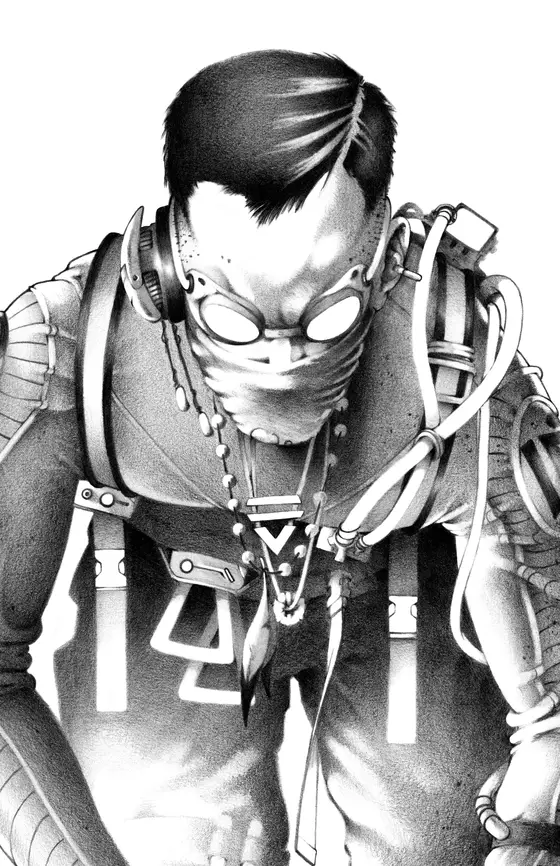
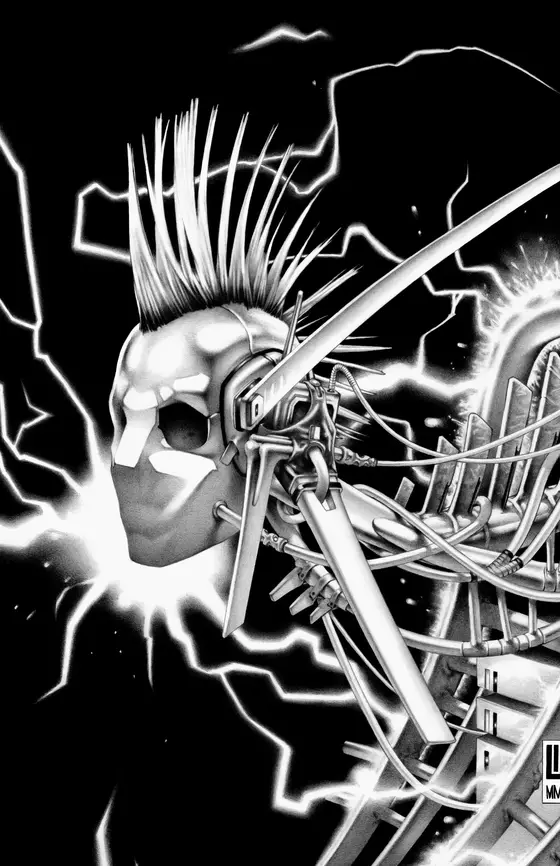
Technically, I am now focusing on densifying the extremes: from very light grays to deep, near-black tones. This wider range gives the drawing a more assertive presence and depth as I initiated for Machineries 26.
Finally, the most observant eyes will have noticed the inverted braid technique in comparison with Helens 10. This is the 'Dutch' method (strands crossed under), whereas Helens 10 is the 'French' method (strands crossed over).
Pour la composition, le choix s'est porté sur la sobriété. Un arrière-plan trop complexe aurait affaibli l'impact de la draperie.
J'ai finalement opté pour un portail ancien, une structure de temple abandonné, afin de laisser toute la place au dialogue entre le tissu et sa 'proie'.
J'ai traité l'anatomie de manière "pleinement verticale", en particulier le cou et le buste, afin de créer une continuité de forme et de rythme avec la draperie.
Techniquement, la priorité reste de densifier les extrêmes : des gris très clairs aux gris profonds. On a tendance à dessiner 'au milieu'. Une plus grande amplitude donne au dessin une présence et une profondeur plus affirmées, comme initié sur Machineries 26.
Enfin, par rapport à Helens 10 la technique de la tresse a été inversée. Il s'agit ici de la méthode hollandaise (brins passés par-dessous), alors que celle de Helens 10 est la méthode française (brins passés par-dessus).